Naval Blockade Day Two: Markets Stabilize as Diplomacy Resumes
Summary
The US naval blockade of Iranian ports entered its second day as markets digested the collapse of weekend peace talks in Islamabad. Shipping activity remained minimal, with Iran's Revolutionary Guard enforcing its own restrictions on outbound traffic. Markets showed resilience after Monday's dramatic reversal, holding gains despite oil staying above $99/barrel. Pakistan, Egypt, and Turkey announced a renewed diplomatic push, offering Iran a face-saving off-ramp while Trump weighs his next escalation. Defense stocks remain near all-time highs as the Pentagon's $1.5 trillion budget anchors the sector.
Military Developments
Blockade Status: Day 2
CENTCOM confirmed the blockade remains in effect, targeting all vessels entering or exiting Iranian ports. Non-Iranian shipping through the Strait of Hormuz is permitted to transit freely, a critical distinction that has prevented oil prices from spiking above $110/barrel. Satellite imagery showed minimal activity at Bandar Abbas and Kharg Island, Iran's two largest export terminals.
Naval Posture
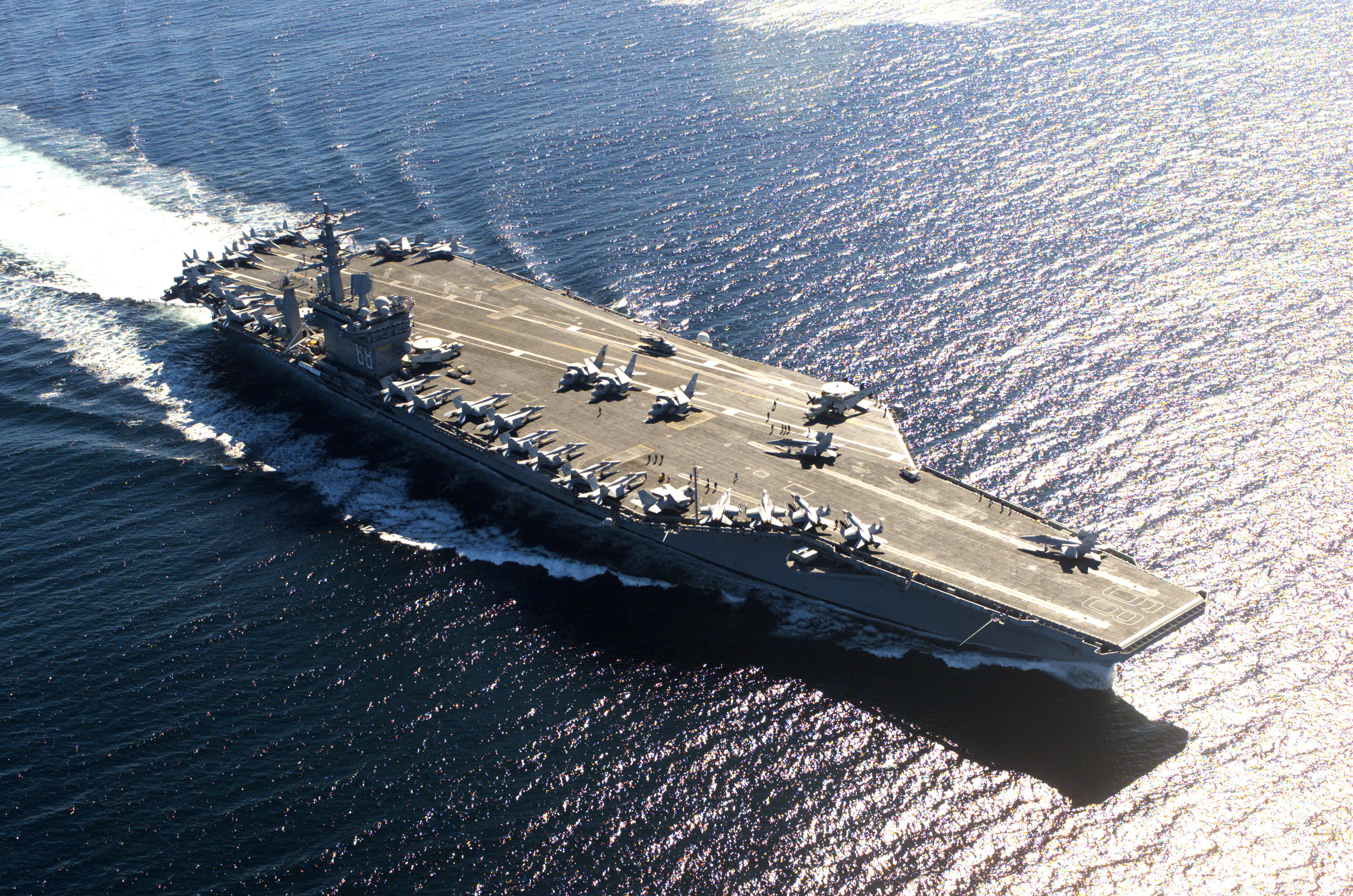
The Pentagon confirmed sustained carrier strike group presence in the Arabian Gulf. Two carrier groups — USS Abraham Lincoln and USS Dwight D. Eisenhower — are positioned within 200 miles of Iranian waters, supported by guided-missile destroyers and submarines. The deployment represents one of the largest naval concentrations in the region since the 1980s Tanker War.
Iranian Response
Iran has not yet retaliated militarily against US naval assets. Supreme Leader Khamenei issued a statement calling the blockade "an act of war" but stopped short of ordering direct strikes on American ships. Iranian officials continue to demand recognition of Hormuz sovereignty and war reparations as preconditions for any negotiations.
Market Update
Equities Hold Gains
Markets opened cautiously but held Monday's remarkable reversal that erased the S&P 500's entire war-related losses. Key levels:
- S&P 500: Trading near 6,900 — highest level since before the war began
- Dow Jones: Positive for the year after +301-point Monday rally
- Nasdaq: Tech resilient on Goldman Sachs software sector upgrade
- VIX: 19.12 — fear gauge at lowest level since mid-March
Oil Consolidates Above $99
- Brent crude: ~$99-100/barrel — holding above psychological support
- WTI crude: ~$99/barrel — remarkable stability given active blockade
- Key insight: CENTCOM's narrow implementation (only Iranian ports, not all Hormuz traffic) has capped the upside risk
Sector Performance
Energy leading:
- Chevron (CVX): Up 32% year-to-date; record cash flows from elevated prices
- ExxonMobil (XOM): Q1 earnings expected to show windfall profits
- Canadian producers (CNQ, SU): Benefiting from WTI above $99
Defense resilient:
- Lockheed Martin (LMT): ~$630 — Q1 earnings April 23
- RTX: Near all-time high ~$245 — backlog at $251 billion
- Northrop Grumman (NOC): ~$686 — B-2 deployment supporting premium
- The $1.5 trillion FY 2027 budget provides structural support
Economic Impact
Inflation Pressures Mount
- March CPI: +0.9% month-over-month — largest jump in nearly 4 years
- University of Michigan sentiment: 47.6 — near recession levels
- Fed rate cut expectations: Zero cuts priced for 2026
- 10-year Treasury yield: 4.317% — staging a comeback after brief dip
Fertilizer Crisis Deepens
- Urea: $650+/metric ton (spot above $800) — spring planting underway with farmers unable to afford inputs
- Nutrien (NTR): Up 23.5% YTD on nitrogen supply shock
- Iran and Qatar (via Hormuz) account for ~30% of global nitrogen exports
- The blockade has no near-term end date, deepening the food security crisis
Political and Diplomatic Developments
Mediation Efforts Resume
Despite the collapse of Islamabad talks, diplomatic channels remain active:
- Pakistan: PM Shehbaz Sharif maintaining contact with both sides
- Egypt and Turkey: Proposing a 45-day ceasefire framework
- Trump's signal: Monday's "Iran called" comment keeps deal hopes alive
Allied Fractures Deepen
- UK: PM Starmer reaffirmed Britain will not support the blockade
- EU: Von der Leyen emphasized freedom of navigation in Hormuz
- Switzerland: Airspace closure to US military operations continues
- The blockade remains a unilateral US operation with Israeli support
Iranian Demands
Tehran has outlined four core demands for any negotiations:
- Recognition of Iranian sovereignty over the Strait of Hormuz
- War reparations from the US and Israel
- Release of frozen Iranian assets ($6+ billion)
- Right to continue uranium enrichment for peaceful purposes
What to Watch
- Oil price direction — holding above $99 is critical; break below $95 signals deal progress
- Iranian retaliation — Tehran's restraint so far is notable but may not last
- Trump's next move — markets priced in a deal within days on Monday; if it doesn't materialize, rally is at risk
- Q1 earnings reports — energy and defense sectors reporting this week and next
- Diplomatic breakthroughs — Pakistan-Egypt-Turkey mediation is the active channel
- European positioning — will more NATO allies follow UK/Switzerland in distancing from the blockade?
Key Levels
Markets:
- S&P 500: 6,900 resistance — break above signals sustained recovery
- VIX: 19.12 — watch for move above 25 (escalation signal)
- Brent: $95-105 range — floor/ceiling for deal vs. escalation
Defense/Energy:
- LMT: ~$630 — Q1 earnings April 23 catalyst
- XOM/CVX: Near all-time highs — take-profit zone if deal materializes
- NTR: Structural fertilizer supply crunch intact regardless of ceasefire
Analysis
Day 47 represents a stabilization after Monday's dramatic intraday reversal. The market has defined a clear narrative: Trump's blockade is the forcing function that produces a deal, not the start of open-ended escalation. The narrow implementation — targeting only Iranian ports, not all Hormuz traffic — was the key to preventing an oil spike above $110. But this bet requires Iran to come to the table within days. If Tehran doesn't fold, the entire rally unwinds.
The blockade's narrow scope is both a strength and a weakness. It maintains maximum pressure on Iran's oil export revenue while avoiding the worst-case scenario of a complete Hormuz closure. But it also signals to Iran that the US is not willing to risk a global oil shock, which may embolden Tehran to wait out the pressure.
Defense and energy remain the safest positioning. The $1.5 trillion defense budget and $99/barrel oil provide structural support regardless of near-term headlines. Fertilizer stocks (NTR, MOS, CF) are the hidden crisis: spring planting is underway with urea above $650/metric ton, and the food security implications are severe.
Sources
- Real-time market data: Bloomberg, CNBC, Reuters
- Economic indicators: University of Michigan, BLS, CME Group
- War developments: Al Jazeera, BBC, Guardian, NYT
- Diplomatic updates: Reuters, Politico, NPR, AP
- Defense sector: Pentagon briefings, company filings
This is a developing story. The Wartime Report will update this page throughout the day as events unfold. Check back for the latest or subscribe to our RSS feed.